Matsuyama
Matsuyama is the capital of the
Ehime prefecture and it is also the most populous city in the entire island of Shikoku.
The city it is primarily famous for its castle, one of the most beautiful in all of Japan, located in the central area of the city and around which there are various other attractions, and for the area of
Dogo Onsen, an ancient spa area mostly famous for its onsen.
Matsuyama city center
Matsuyama Castle
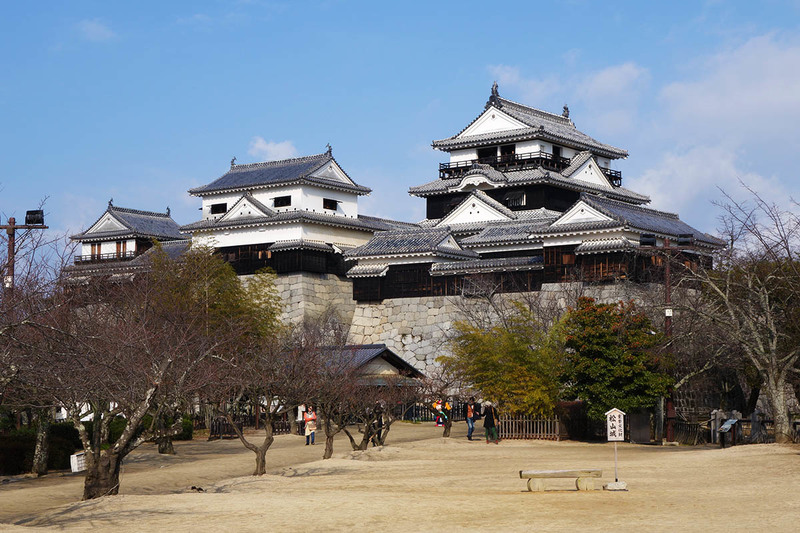
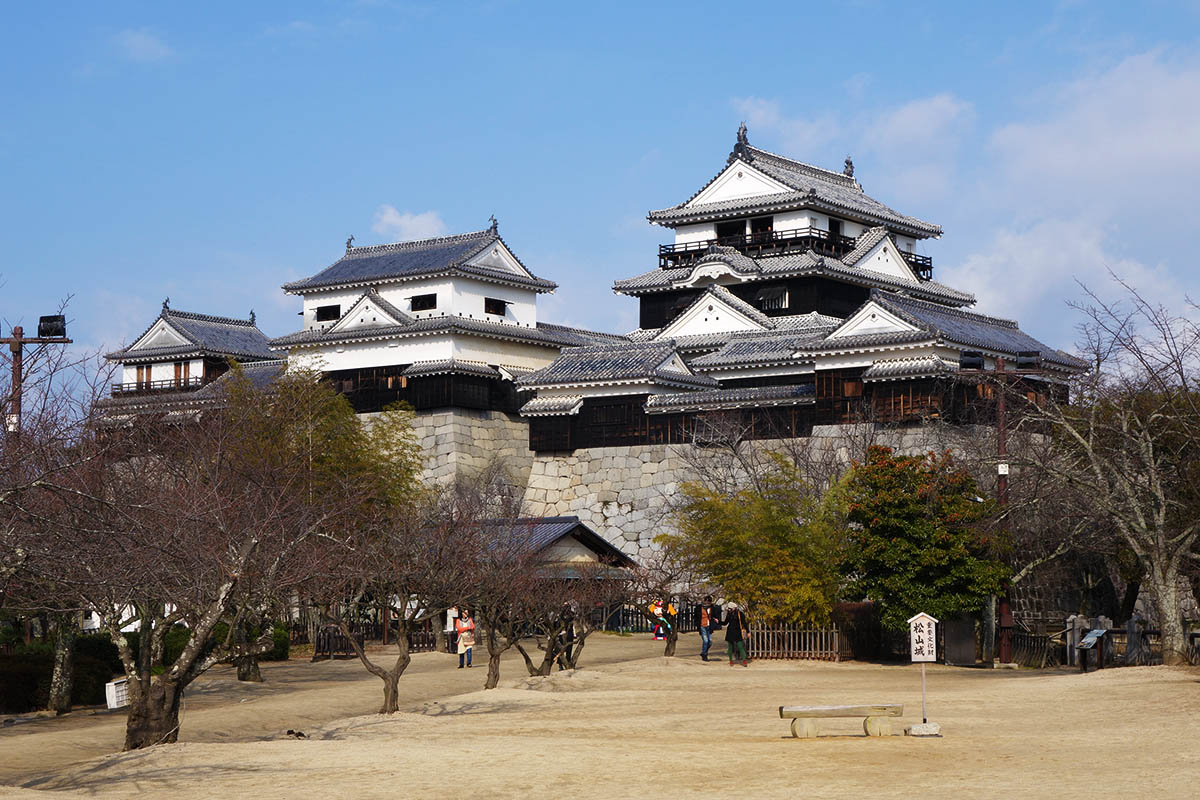
Matsuyama Castle is one of the best examples of Japanese feudal castle survived through the centuries, and is located on a hill that rises in the center of the city (
Mount Katsuyama, 132 m), which can be climbed on foot (15 minutes) or by ropeway/chairlift (270 yen, 510 yen round trip) located on the east side.
This castle was built between 1602 and 1628 at the behest of
Kato Yoshiaki, and you can still find some buildings of the time as well as other buildings built in later periods, and others rebuilt in recent decades trying to copy the original plans.
The complex is very extensive and includes many buildings, the path to get to the main tower of the castle is very impressive and fascinating, also thanks to the surrounding landscape. One of the best places to visit for lovers of Japanese feudal castles.
The main tower of the castle, formerly of 5 floors, was destroyed by lightning, the current one, of three floors, was built in 1820 and now houses a sort of museum (510 yen) which displays various artifacts found in the area and from its top floor you can enjoy a view over the city of Matsuyama.
The castle in the past also included some outbuildings (
Ninomaru) located at the foot of the hill. Today nothing remains of these buildings but the
Ninomaru Garden stands in their place.
 Matsuyama Castle
Ninomaru Garden
(admission 100 yen, opening hours 9-17, until 16:30 dec-feb, until 17:30 aug)
These gardens, as mentioned above, are located in an area close to the Castle of Matsuyama, which once housed the outbuildings (outside the walls) of the castle (
Ninomaru), that unfortunately were all destroyed.
Today in their place there are beautiful gardens extending over the still visible foundations of the ancient buildings of the castle.
Bansuiso
(admission 300 yen, opening hours 9-18, closed on mondays)
An unusual Western-style building (particularly French), built in 1922 by the will of a wealthy descendant of a noble family in the area who had spent a long period of study in France. The project was commissioned to the architect
Shichiro Kigo.
Today the building has been converted into a sort of museum whose interior can be visited: besides the furniture of the period, there are also on display some of the works belonging to the
Ehime Prefectural Museum of Art.
The Bansuiso is located near the Castle, south of Mount Katsuyama.
Saka no Ue no Kumo Museum
(admission 400 yen, opening hours 9-18:30, closed on mondays)
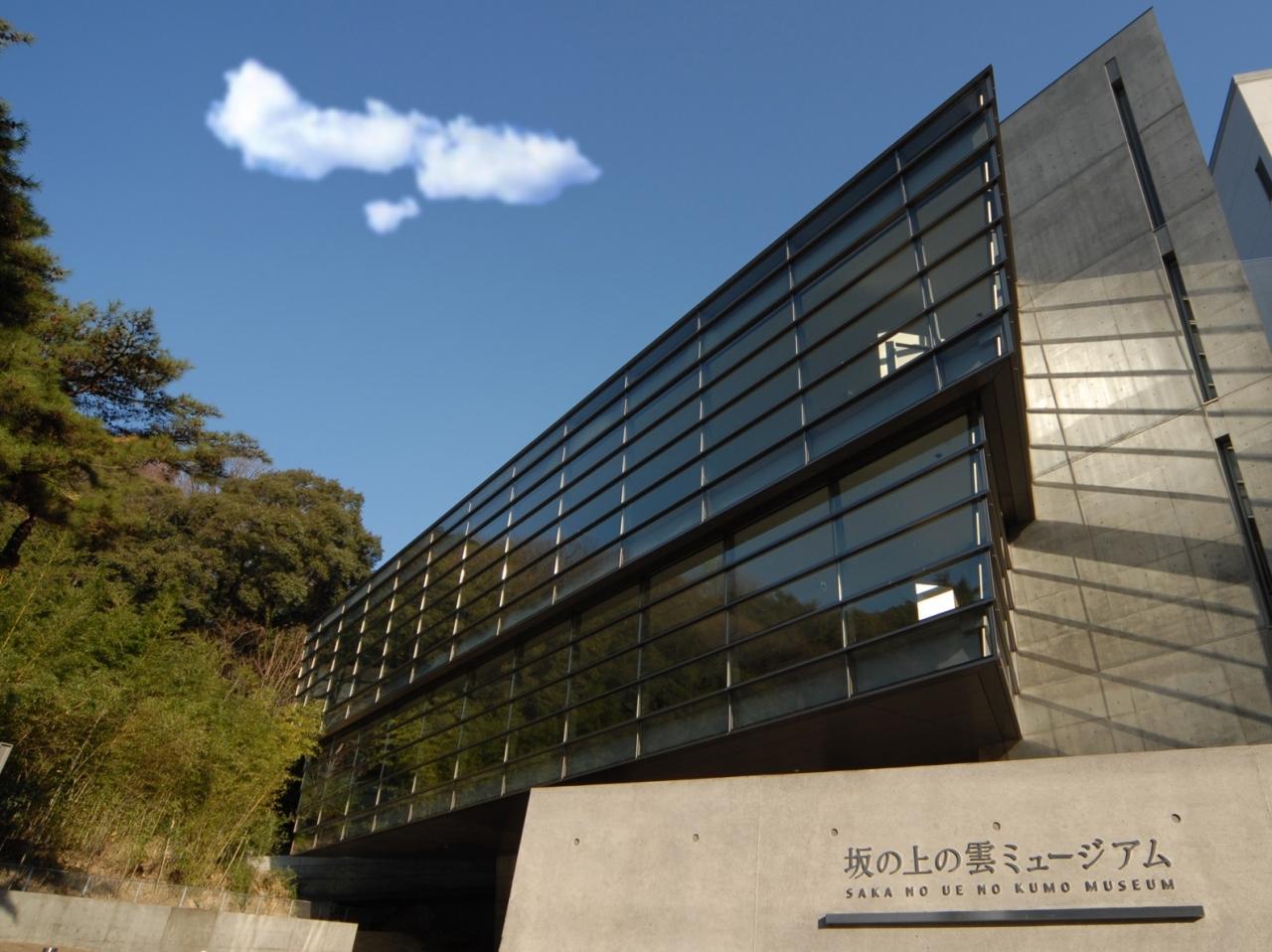
This museum is dedicated to a famous historical novel of Japanese literature,
Saka no Ue no Kumo written by
Ryōtarō Shiba (1923-1996). The novel has three main characters and all of them were born in Matsuyama,
Akiyama Yoshifuru,
Akiyama Saneyuki and
Masaoka Shiki.
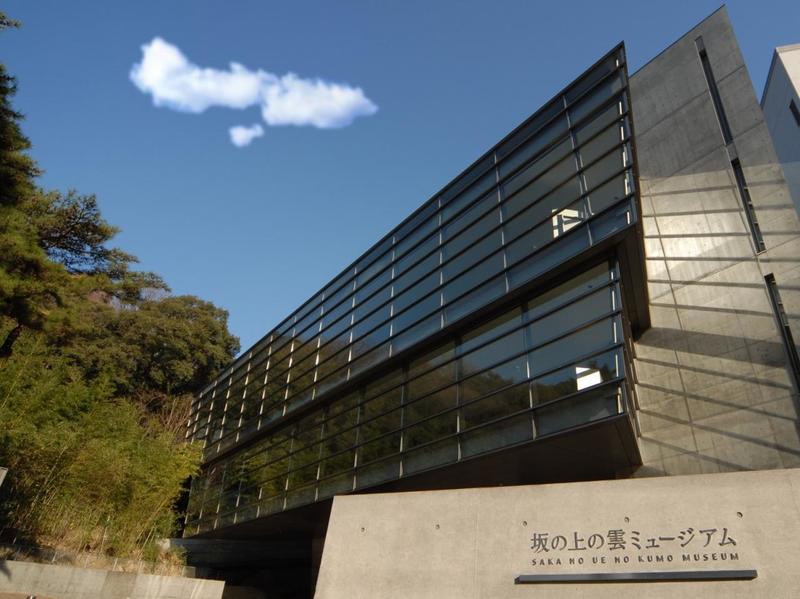
The museum is housed in a modern building of great architectural value designed by the famous architect
Tadao Ando and it opened in 2007.
 Saka no Ue no Kumo Museum
Ehime Prefectural Museum of Art
(admission 300 yen, opening hours 9:40-18, closed on mondays)
An art museum located south-west of the castle.
Akiyama Brothers Birthplace
(admission 300 yen, opening hours 10-17)
The Akiyama Brothers (
Akiyama Saneyuki e
Akiyama Yoshifuru were two important military figures of the Japanese army, and they gave a great contribution to the victory in the wars against China and especially Russia in the years between the nineteenth century and the twentieth century. Their life is also narrated in the previously mentioned novel
Saka no Ue no Kumo.
The Akiyama brothers were born right in Matsuyama, and their home has now become a place of tourist interest, although it was destroyed during the Second World War. The current building was reconstructed by copying the original one thanks to some photographs, and displays various objects related to the history of the two national heroes.
Dogo Onsen
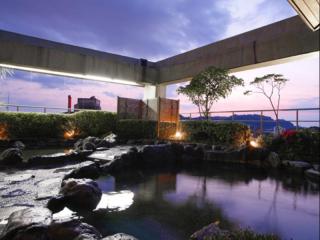
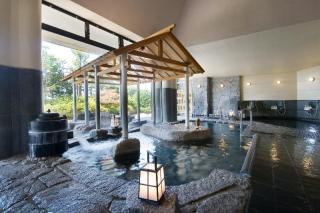
Dogo Onsen is an area of the city of Matsuyama which is about 15-20 minutes far by tram from the city center. This area is famous for its hot springs, there are indeed many onsen, both inside hotels and ryokan and public ones.
The center of Dogo Onsen is the area around the tram station, in front of which there is a covered shopping arcade leading to the most famous public onsen of the district, the
Dogo Onsen Honkan.
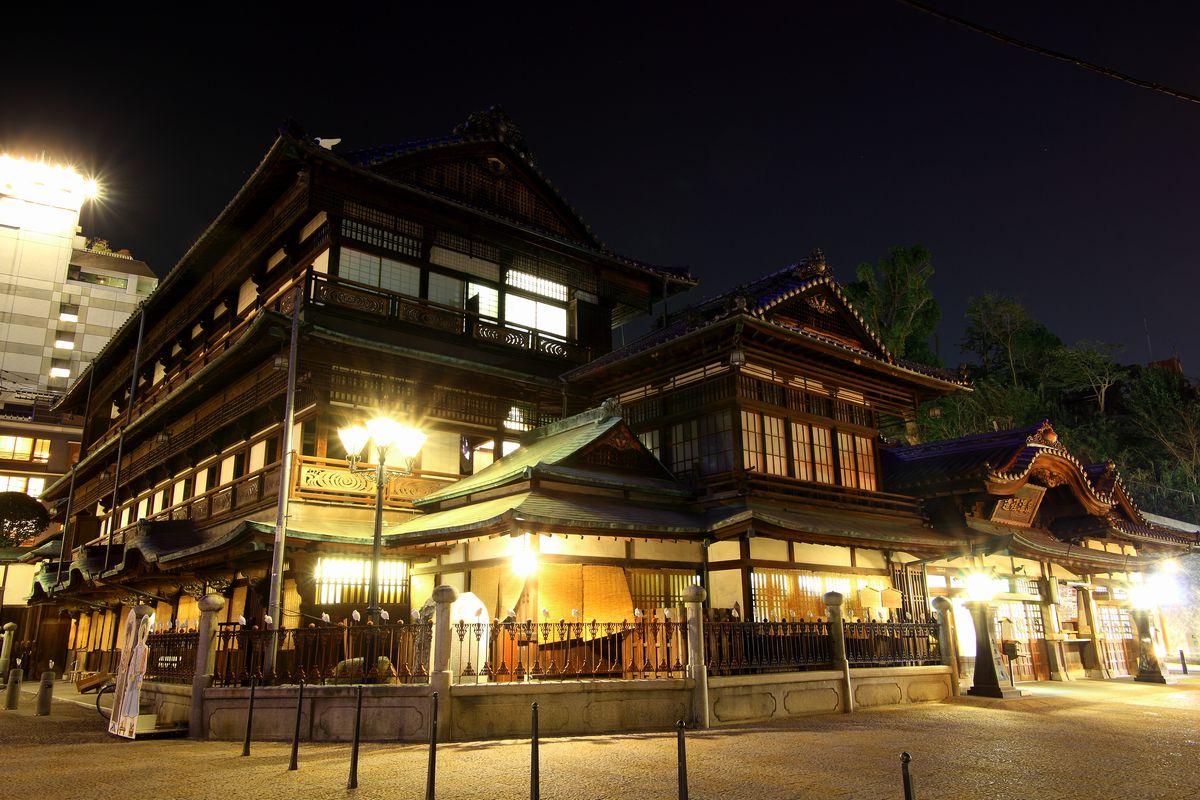
Dogo Onsen Honkan
This public onsen is the most famous attraction of Dogo Onsen.
It is considered one of the oldest public baths in all of Japan, with a long history full of anecdotes and legends.
The current building dates back to the Meiji era, it was built in 1894. In 1899 the family of the emperor came on a visit to this onsen, and for the occasion it was built a private annex (
Yushinden) which was later used on other occasions by the imperial family. The last visit was in 1950 by Emperor Hirohito, while today the annex is open to tourists and you can visit it by purchasing an admission ticket (260 yen).
A nice place to visit, more interesting for its history rather than for its thermal springs, which are often crowded with people because of the popularity, and it makes it lose a part of the charm of Japanese onsen that is right the peace and relaxation that you can find there.
Inside the building there are two different thermal baths, both divided by sex, the
Kami no yu (admission 410 yen) and the
Tama no yu (admission 840 yen), more expensive and therefore less crowded.
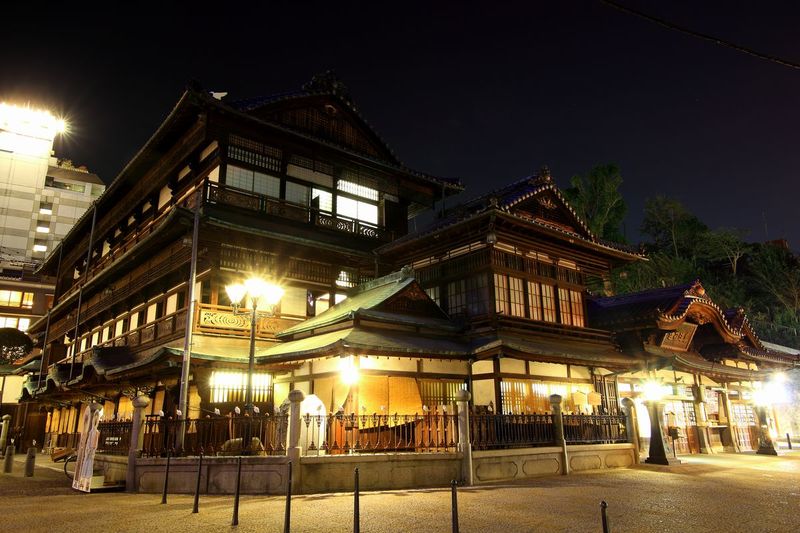 the exterior of the most famous public onsen of Dogo Onsen
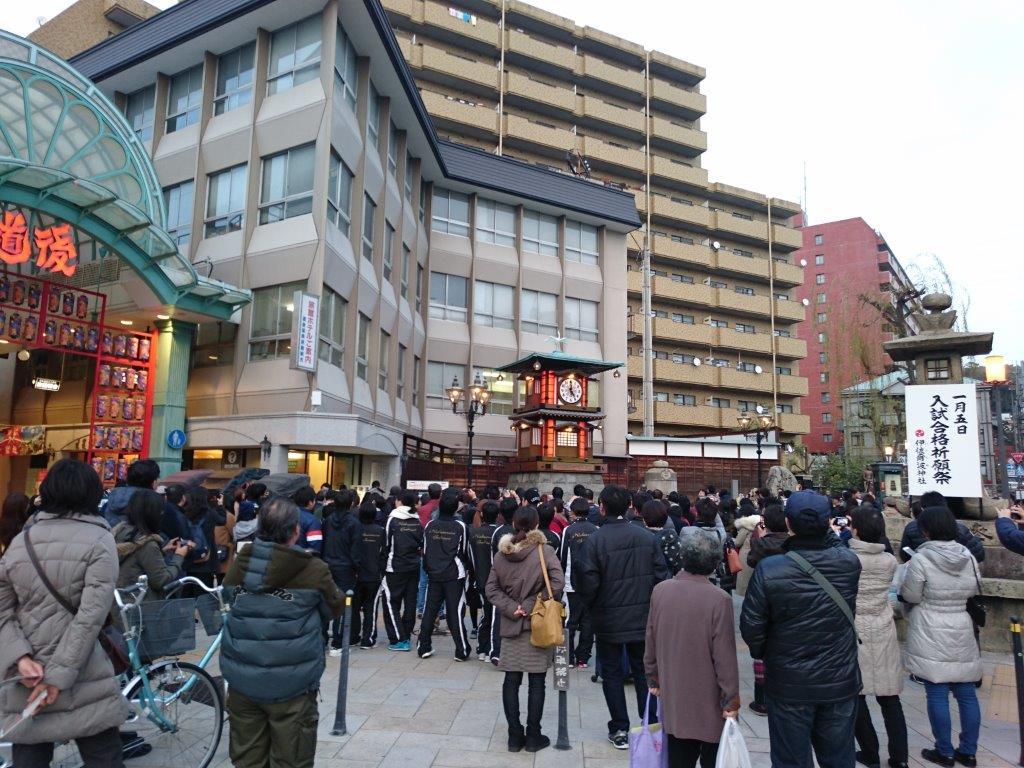
Botchan Karakuri Clock
(the clock chimes from 8 to 22)
A large clock located opposite the tram stop of Dogo Onsen, on the right of the covered shopping arcade of the neighborhood.
The feature that has made this watch a popular tourist attraction in the area is the fact that every half hour/every hour (depending on the season) the clock starts to play a jingle, and from the interior come out some figurines of characters of one of the most famous literary works of Soseki Natsume, "
Botchan".
Next to the clock there is also an onsen for feet that can be used freely.
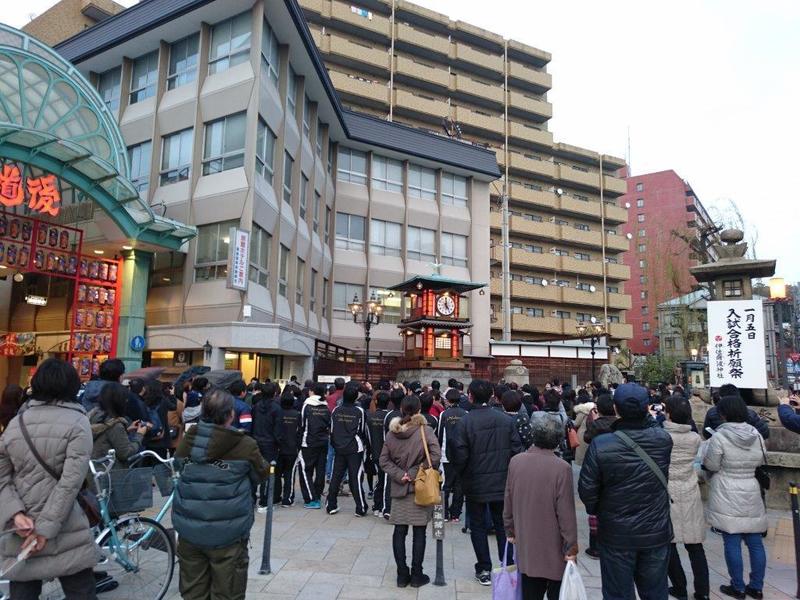 the crowd waiting for the chime of the clock
Ishiteji Temple
(free admission)
The most famous Buddhist temple in the area, it can be reached by walking for about 15-20 minutes going east from the tram terminus.
The temple is situated on a vast area that includes several buildings, including a three-storied pagoda and an entrance gate of great historical importance, dating back to the
Kamakura period (1192-1333).
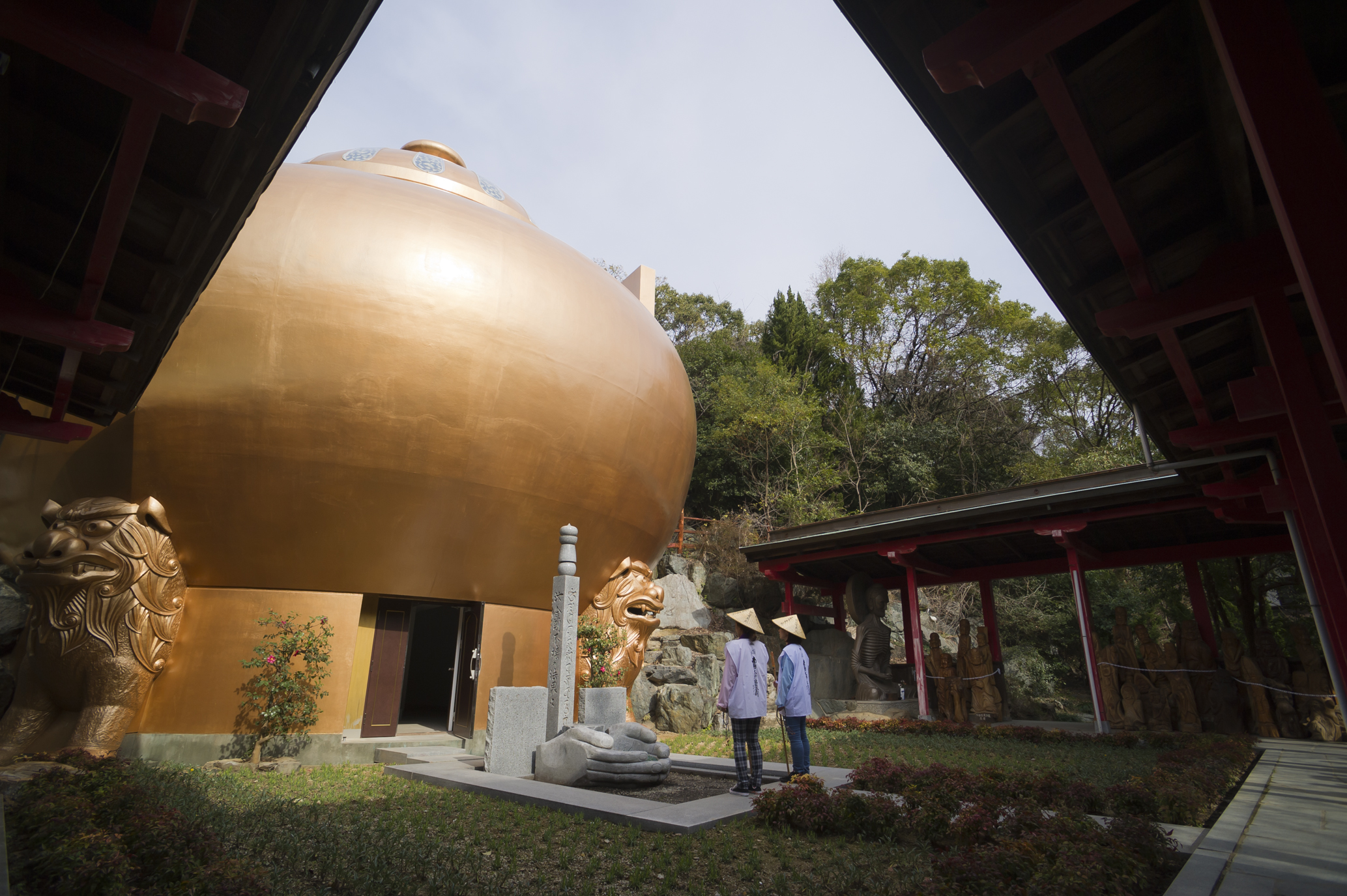
In addition to the main complex, through a 200 meters long tunnel dug under the rock and full of religious statues, you can get to a second temple of a rather curious style, with a golden dome which is probably unique in Japan.
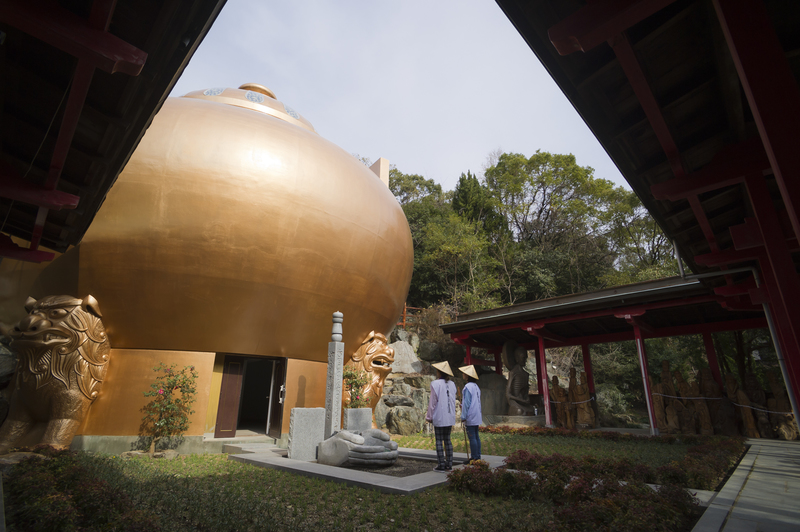 the particular small temple inside the Ishiteji
Isaniwa Shrine
(free admission)
At about 200 meters from the terminus of the tram in Dogo Onsen, after covering a fascinating stone staircase, you get to this Shinto shrine, the largest in the district. Not that it has anything particularly interesting, but it is at least worth a look if you are already in the neighborhood.
Dogo Park
A huge park located in the heart of Dogo Onsen, in the place where once stood a castle that was destroyed, today you can find only the moats full of water and not much else. This park is very popular in spring during the hanami period (cherry blossom) as a place for picnics and barbecues. In the northern side of the park there is also the
Shiki Memorial Museum.
Shiki Memorial Museum
(admission 400 yen, opening hours 9-18, until 17 nov-apr, closed on mondays)
A museum dedicated to the life and works of Masaoka Shiki, one of the most famous Japanese poets of the last centuries, who was born and raised right in the city of Matsuyama.
The museum is located within the Dogo Park.
Other points of interest
Matsuyama Sogo Koen
A big park that extends on a hill situated about 1.5 km west of Matsuyama station. Inside there is a strange building that looks like an European medieval castle.
Russian cemetery
About 3 km north of Matsuyama station, in an area full of small Buddhist temples, there is a cemetery in which were buried a hundred Russian soldiers taken prisoner during the Russo-Japanese War (1904-1905). The name of each deceased is written on the tomb in both Japanese and Cyrillic, and a special symbol reminds the religious faith of each one of them.
Sleeping in Matsuyama
Recommended hotels in the center of Matsuyama
 Terminal Hotel Matsuyama
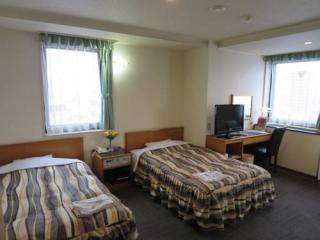
A business hotel which is really close to the train station of Matsuyama and the tram stop, to easily reach the castle and the area of Dogo Onsen. This hotel is quite popular among Western tourists, and the staff is adequately prepared to receive foreign guests. The rooms have everything you need for a comfortable stay. Single on offer from 5,000 yen per night, double from 6,000 yen per night. Good breakfast at a reasonable price, 650 yen per person.
Terminal Hotel Matsuyama
A business hotel which is really close to the train station of Matsuyama and the tram stop, to easily reach the castle and the area of Dogo Onsen. This hotel is quite popular among Western tourists, and the staff is adequately prepared to receive foreign guests. The rooms have everything you need for a comfortable stay. Single on offer from 5,000 yen per night, double from 6,000 yen per night. Good breakfast at a reasonable price, 650 yen per person.
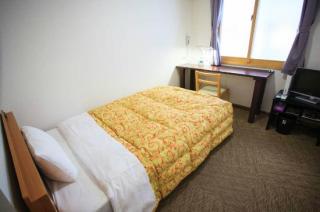 Matsuyama New Grand Hotel
A business hotel a few minutes walk from the Ninomaru Garden and the cable car to the castle, near a lively shopping area. The station and Dogo Onsen can be easily reached in a few minutes by tram. Large thermal baths are available for all guests. In this hotel you can save money by choosing the economy rooms from 4500 yen per night that have everything you need for a comfortable stay but do not have private bathrooms. Single rooms with private bathroom from 5300 yen per night, doubles from 9000 yen per night. Breakfast 700 yen per person.
Matsuyama New Grand Hotel
A business hotel a few minutes walk from the Ninomaru Garden and the cable car to the castle, near a lively shopping area. The station and Dogo Onsen can be easily reached in a few minutes by tram. Large thermal baths are available for all guests. In this hotel you can save money by choosing the economy rooms from 4500 yen per night that have everything you need for a comfortable stay but do not have private bathrooms. Single rooms with private bathroom from 5300 yen per night, doubles from 9000 yen per night. Breakfast 700 yen per person.
Recommended hotels in Dogo Onsen
If you stay overnight in Dogo Onsen I can imagine that the reason for your choose is to relax in a traditional Japanese onsen.
In this case you have two main options, the first one is to choose an affordable accommodation and then go at one of the public onsen by paying the admission, the second one is to stay in a hotel or ryokan that has also large onsen for its guests (more expensive).
In the case of the first option, you can simply stay in one of the two above-mentioned business hotel and go to Dogo Onsen by tram during the day, or, if you want to sleep right in Dogo and/or you want to spend very little money, I recommend the
Sen Guesthouse.
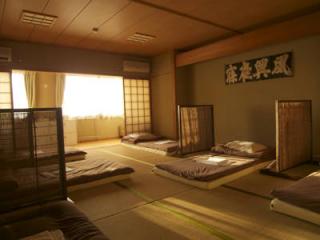 Sen Guesthouse
A hostel located a few minutes walk from the tram stop Dogo Onsen. Very cheap accommodation, one of the cheapest ever of the entire city of Matsuyama, with beds in large shared rooms with tatami mats and 6 futons (or with bunk beds) at 2,800 yen per night. Available to all guests a terrace and bicycle rentals. Private rooms with shared bath are also available from 4500 yen and 7000 yen respectively for the single and double room.
Sen Guesthouse
A hostel located a few minutes walk from the tram stop Dogo Onsen. Very cheap accommodation, one of the cheapest ever of the entire city of Matsuyama, with beds in large shared rooms with tatami mats and 6 futons (or with bunk beds) at 2,800 yen per night. Available to all guests a terrace and bicycle rentals. Private rooms with shared bath are also available from 4500 yen and 7000 yen respectively for the single and double room.
In the case of the second option, around Dogo Onsen there are many hotels with great onsen inside, and where rooms are decorated in traditional Japanese style. Among the many hotels of this kind in Dogo Onsen, as for value for money the following two ones are the best.
Pratical guide: how to get around Matsuyama
The city's main station, where you will arrive if coming from other cities in Japan, is
JR Matsuyama station.
There is also another important station in the city, called
Matsuyama City station and the main interchange station of the private company
Iyo Railway. The surrounding area is very lively and full of shops, but you'll hardly need this station if you are foreign tourists, unless you come or want to get to Hiroshima by ferry (see below). In the latter case, to take the ferry you have to go first to
Takahama station by the
Takahama line of the Iyo Railway, and the terminus of this line is right Matsuyama City station (Matsuyama-shi eki).
Tram in Matsuyama
The best way to move around from the JR Matsuyama station to all major tourist attractions is that of using the tram city network. A tram ticket costs 160 yen and there is also a day pass which costs 400 yen.
How to get to Matsuyama Castle
If you want to get to the castle by cable car, the nearest tram station is
Okaido (5 minutes from Matsuyama station). Many of the other points of interest in Matsuyama are close to this tram stop or near one of the previous stops, you can easily check the nearest stop by using the map provided by Google Maps at the bottom of the page.
How to get to Dogo Onsen
Dogo Onsen is the terminus of three tram lines: the lines number #3, #5 and #6. From Matsuyama station it takes about 20 minutes.
Pratical guide, how to get to Matsuyama
By train
If you want to get to Matsuyama by train from major Japanese cities such as Tokyo and Osaka, you must first get to
Okayama station, located more or less halfway between Osaka and Hiroshima and served by the high-speed line
Sanyo shinkansen, and once arrived at Okayama take one of the limited-express trains bound for Matsuyama, called
Shiokaze. These trains take about 160 minutes for the entire trip from Okayama to Matsuyama and cost 7030 yen (about one departure per hour).
By bus
The city of Matsuyama is also connected by buses of various companies to the major cities of the country.
From Tokyo the journey is very long and it takes from 12 to 14 hours, from Osaka it takes 6-7 hours. Both routes are also served by the well-known low-cost and foreign-friendly company
Willer Express.
By ferry
The ferry is undoubtedly the best solution to reach the city of Matsuyama if you leave from a place nearby
Hiroshima or from the Kyushu region not too far away from
Beppu.
From Hiroshima
The port of Hiroshima and the port of Matsuyama (
Takahama, about 20 minutes far by train from the city center) are frequently connected by the ferry company
Setonaikai Kisen. There are connections by high-speed boats that take approximately 70 minutes for the whole journey (7100 yen) and connections by ferry taking about 2 hours and a half and with a much lower price (3600 yen). More information on the
official website of the company (also in English).
From Beppu (to Yawatahama)
Yawatahama is a port located on the southern coast of Shikoku region. You can move between Yawatahama and Matsuyama by train in 40-50 minutes.
The company
Uwajima Unyu Ferry offers six daily connections betweent the port of Beppu and Yawatahama and viceversa. The sailing time is about 3 hours and a one-way ticket costs 3,000 yen.
This one is the official website of the company (only in Japanese).
By plane
The city of Matsuyama has its own airport located a few kilometers from the city (
Matsuyama airport, MYJ).
The airport is connected with some Japanese cities, including Tokyo (90 minutes,
JAL,
ANA,
Jetstar Japan) and Osaka (60 minutes,
JAL,
ANA,
Peach).
If you haven't a Japan Rail Pass, the plane is particularly recommended compared to the train not only for the journey time but also to save money, especially of course with the low-cost airlines Jetstar and Peach.
Map of Matsuyama
Guided tours, activities and other things to do
If you are planning a trip to Japan and you want to do something more than just visiting famous places and monuments, we suggest you to use
Rakuten Travel Experiences.
How to use Rakuten Travel Experiences
Rakuten Travel is a very useful website to
enrich your travel experience, especially if you are going solo or it's your first time in Japan.
Because of the language barrier (and more), in Japan it is very difficult to interact with the locals and to get off the tourist track.
Thanks to Rakuten Travel you can find a lot of interesting and sometimes unique
guided tours and activities all over Japan (and not only in Japan), that you would otherwise never be able to enjoy.
But there's more: on Rakuten Travel you can also
buy tickets for several famous attractions, events, transportation and other useful services for tourists. Last but not least, you can
reserve a table in hundreds of restaurants.
Some examples
Take a look at Rakuten Travel Experiences
You may also be interested in
 Matsuyama Castle
 Saka no Ue no Kumo Museum
 the exterior of the most famous public onsen of Dogo Onsen
 the crowd waiting for the chime of the clock
 the particular small temple inside the Ishiteji